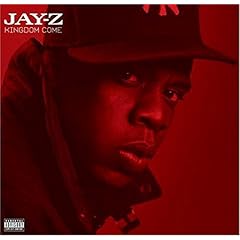
Buy this album from Amazon.com---118 used & new available from $1.94
Tuesday, December 19, 2006
Lofty title but welcome comeback
Tuesday, December 12, 2006
Hip Hop is Dead, but Nas's production just as lifeless

Buy this album from Amazon.com---95 used & new available from $5.99
And who has more clout than Nas? This is a guy who's been through it all, and is respected by nearly every hip hop critic and fan. Not to mention he recorded an album that changed the face of rap music as whole--when he was a teenager. Nas's Hip Hop is Dead addresses a problem that almost no successful rapper has had the balls to confront, and while the album isn't nearly as groundbreaking or flawless as Illmatic was, it's a step in the right direction.
"Money over Bullshit" and "You Can't Kill Me" are typical 'life in the streets' Nas songs, and like most typical Nas songs, only die hard Nas fans are going to think they are excellent. The lyricism is there, as always, but other than that, these songs don't offer much in terms of grabbing the listener; not to mention they don't have much to do with the "Hip Hop is Dead" theme of the album.
For the rest of the album, Nas gets back on topic, for the most part. You have "Carry on Tradition" which confronts most rapperss quest for money and status that overrides a desire to create true art and "carry on the tradition" of rap legends like Rakim and Big Daddy Kane. He offers a old-school sounding tribute to those same legends on "Where Are They Now?", its title asking the question whose answer may be the key to Nas's solution to rap's problem.
There is, of course, the obligatory collaboration with "Bossy" wife, Kelis, "Not Going Back," which is good enough considering the fact that Kelis's presense is basically expendable; but you knew he'd do it. As a matter of fact, for an album that seems like it is intended to express a personal qualm with the music industry, there are a whole lot of guest artists. The aformentioned Kelis, The Game, Jay-Z, and Snoop Dogg all lend their voices to the project. Then there is the Kanye West production, which seems like a must nowadays for every east coast album to be released. What these east coast rappers don't seem to realize in their excitement of working with the hottest new producer around is that Kanye is giving them his throwaway beats. While "Still Dreaming" is significantly better than uninspired productions like Rhymefest's "Brand New" or Mos Def's "Sunshine", something is still left to be desired from a guy who created the beat-making masterpiece album, Late Registration. Even with that being so, "Still Dreaming" is one of the better productions on the album, which exemplifies a ongoing problem for Nas's albums: the beats! Hip Hop is Dead is no exception. The album is plagued with elementary drum patterns and drab r&b samples which make the album all the more unentertaining. From an old school perpective, this may have not been such a problem, because back then dj's and producers were still experimenting with their drum machines and turntables. But this is 2006, and when you have Timbalands and Just Blazes running around, there's no excuse for an album to not be musicially sound.
An example of a good production is the will.i.am produced titular track "Hip Hop is Dead", which recycles the "In-A-Gadda-Da-Vida" sample from Street's Disciple's "Thief's Theme". The result is a more fast-paced, more unique, and ultimately better song that requires Nas to show off his double-time flowing abilities.
This review wouldn't be complete without mentioning the much anticipated collaboration with Jay-Z, "Black Republican", which is rapped over a fitting "political-sounding" beat. Both emcees drop good verses, and you'll forget that they used to hate each other with how seamlessly this song is delivered. With all that being said; while "Black Republican" is definitely a solid track, it is by no means a ground-breaking or classic one, and you can tell that it didn't take very long to make it; it was just something Jay and Nas felt they had to do, as Jay-Z says in the beginning of the track, "it's what you expected, ain't it?"
Hip Hop is Dead addresses a problem that, prior to this year, only Jay-Z has been able to admit exists. Unlike Jay-Z, however, Nas doesn't take on the ridiculous task of attempting to save hip hop all by himself. This album answers something that we all have been wondering for years: is Nas in it for the money? Maybe at one time, he was, but as of now, it's clear that Nas is more concerned with being artistic than going platinum, and that's what Nas wishes everyone else in the rap game would do.
As admirable as that ideal is, his campaign for it could have been delivered a bit better if some of the filler was shaved off and as much time was put into the production as was put into the lyrics.
The Report Card
Production: C
The beats are consistently unimpressive throughout the album, and while some tracks like "Hip Hop is Dead" and "Still Dreaming" are above average, they don't distract from the overall presentation.
Flow/Lyrics: A
Nas's flow, lyrics, and rhyme schmes are as good as they've ever been.
Originality: B-
Some tracks get stuck in the "life in the streets" subject matter that Nas has been talking about for years, but for the most part, Nas takes a unique approach to an already taboo concept.
Overall: C+
The uninspired production takes away from the album big time. Most every beat is organized the same way, the drum patters are mind-numbingly elementary, and the sounds and melodies themselves aren't ear-grabbing. But Nas fans, and lyrical fans are going to love it because it is solid lyrically, and his flow has improved since Street's Disciple.
at
12/12/2006 01:03:00 PM
0
comments
Labels: reviews
Thursday, December 7, 2006
Idlewild wild enough to make up for the idle

Buy this album from Amazon.com---151 used & new available from $1.77
The wildly successful experimental hip hop duo Outkast has managed to do several things that most hip hop acts find impossible: achieve mainstream success despite being majorly experimental (and sometimes, downright weird); and more notably, they have found a way to get better with every album.
Some people respect Aquemeni and Stankonia just a step under the Bible, but you have to realize, Dre and Big have grown incredibly since then as emcees and as artists in general. We saw this on the incredible double-disc, Speakerboxxx/The Love Below, on which Big Boi proved that he could hold his own without his partner; and on which Andre proved he didn't have to rap to make a good album.
In many ways the companion album and namesake to the film, Idlewild, is better than its predecessor. It's Big Boi at his best by far, and it fixed the only problem early albums like Stankonia had: being creative and experimental but not bizarre. Unfortunately, Idlewild is missing a few things, most notably Andre 3000's knife sharp lyricism. In other ways, Idlewild is very similar to Speakerboxxx/The Love Below. Sorry, Outkast fans, but there are very few tracks with both Dre and Big on them. Oh, and Andre 3000 decided not to rap again.
Well, I'm being misleading, Andre raps a little bit. In fact, Outkast plays a little trick on us. After a useless intro that you'll probably only listen to once, we get "Mighty O", which is an all-out, old-school, lyrical Outkast reunion; a hard beat, a sing-a-long chorus borrowed from Cab Calloway, and 32 lines a piece from Andre and Big Boi. This is both emcees at their best, more notably Big Boi, who's suffered from "notasgoodasAndre-itis" for most of his career, yet almost matches Dre line for line on this track. Almost. Andre's writing prowess by now is probably automatic. "Eat up whatever rapper, but I'm tangled in my cord/bored, kind of like a knight with a sword, without dragon to battle" How funny that he can rap excellently about not wanting to rap. I'm sure Outkast enthusiasts were thinking "Outkast is back!" when they first popped in Idlewild and heard "Mighty O". This sentiment is interrupted on the next track, "Peaches," which is a particularly bland "baby-mama" song--sans Andre. The next song is Andre's sung "Idlewild Blues". It's not a bad song by any means. The blues-inspired guitar riff is definetely enchanting, and Andre's wordless chrous is extremely catchy. It seals the deal though, this is not an Outkast album. This is an Andre3000 and Big Boi album.
But that doesn't mean it can't be good. Speakerboxxx/The Love Below showed us that. Big does his part, starting with the first official single, "Morris Brown" which features the marching band from the Atlanta college of the same name. The track is partially an ode to music, and partially an ode to Outkast. The sound created by the marching band arrangment is so full it feels like it's coming from every direction and seeping throught your pores. Scar's choruses are nothing short of spectacular.
Dre's awkward song "Chronomentrophobia" follows. It's a very simple production that ends before we can get anything out of it. It's about two minutes long, and has a pretty ambitious title considering the fairly standard subject matter: getting the most out of life. It also ambiguously refers to Andre's own life and career, and how he believes "it's beginnin' to look a lot like the endin'". This is also one of the very few tracks that includes a rap verse from Andre, and wouldn't you know it, it's not up to par. It contains the same wit and subtle wordplay that he's known for, but the flow seems rushed, and at parts plain elementary.
"Hollywood Divorce" and "Call the Law" are fantastic. The former features Lil' Wayne and Snoop Dogg, and fans of conscious rap music may shudder at that line up, but I assure you, the result is great. Lil' Wayne absolutely brings it on this track, far outshining everyone else. Andre and Big come par, and Snoop Dogg actually doesn't suck too! Andre croons a fitting chorus to a track that personifies Hollywood as an abusive spouse. The film-specific "Call the Law" may be the best song on the album. Big Boi's short verses are cool, but the true star of the track is the guest, Janelle MonĂ¡e, whose exceptional vocals are just right for the half-upset, half-insane female protagonist of the song.
On The Love Below, the novelty of Andre 3000's untrained falsetto and incredible production made up for his unsually average lyrics. However that novelty has worn off and Big Boi is left the daunting task of carrying the album on his shoulders while Andre dicks around in the background. And quite surprisingly, Big Boi succeds. Andre shows up to help on a few tracks, "Idlewild Blues" and "Life is Like a Musical" are great and not out of place like "Makes No Sense at All" and "When I Look in Your Eyes". Every track with both members of the duo on it is excellent, which is exemplary of the problem with this album. If you're going to give us a Big and Dre album instead of an OutKast album, that's fine, but the entire flow of the album is jagged and unnatural due to the forced separation of two entities contributing to the same end. On the prior double disc, there were two discs, two albums, two separate ideas. On Idlewild, you have one idea, but two artists who want to achieve it in two completely different ways, which causes dissaray.
All this aside, however, Idlewild remains easily the most creative mainstream album of 2006 hands down. It's up and down with tracks ranging from dissapointing to amazing, but you won't have to use the skip button on your cd player that many times at all. The only real criticism of the album is that it isn't up to par for OutKast. But par for OutKast is entirely out of reach for many hip hop acts in general. The talent is still there, and probably will always be.
The Report Card
Production: B
The beats are range from great to fantastic all the way through, the only problem is that Big Boi and Andre rarely seem to be on the same page, which makes for a somewhat discordant album.
Flow/Lyrics: B
Big Boi gives his all throughout, and Andre half-asses, but even half-assed he's still impressive.
Originality: A
It's Outkast!
Overall: B
The the asynergy of the tracks is distracting to the delivery of the whole album, but the excellence of most of the individual tracks make this one of the better albums of 2006.
at
12/07/2006 12:09:00 AM
0
comments
Labels: reviews
Wednesday, December 6, 2006
The Report Card: How it Works
Music is multi-faceted, and with that being so, we have decided to implement a Report Card format when we review albums. Each album is broken down in to categories, and for each category, the reviewer gives the album a grade of either A, B, C, D, or F.
A-Excellent: Exceeding our expectations, giving us chills, making us happy
B-Good: Not bad by any means, but still a little bit of room left to completely polish it
C-Average: Bland, Unimpressive, About what we expect from the typical artist and nothing more
D-Poor: Below Average, Exhibits very few good qualities
F-Awful: Just plain wack in all senses of the word.
There will be four categories that we will consider when reviewing albums:
Production: This refers to firstly, the beats that back the track. Are they unique and skillfully executed? Are they effective? Most importantly, are they entertaining? Production also refers to the overall presentation of the album. Everything from the sound quality to the length of the songs to the order in which the tracks are presented.
Flow/Lyrics: Although Flowing and Writing are two separate things, they are in the same category because of how much they depend on each other. Flow refers to the technical aspect of rhyming; cadence, staying on beat, inflections, and the overall charisma in your delivery. Lyrics involve writing and rhyming. How effectively the artist writes and what moods and ideas he can create through words is taken to account. Rhyming skill refers to the masterful selection of words that create the best rhyming synergy. Note that scoring high in this section doesn't necessitate that the artist be super-profound, or use nine-syllable multisyllabic rhyme schemes. It just means that the artist uses words effectively, however he may choose to do that. We may often review albums of other genres, and in that case, singing ability may be factored into this grade.
Originality: The previous two categories are involved with this one. There's no reason for you to be called an artist if you aren't trying to be creative. Basically, scoring high in this category means that the artist is being an individual, not just a rehash of everything else that's out there, whether it be through his concepts, his lyrics, his style, his productions, or whatever.
Overall: This sums it up. Note first of all, that this is not by any means necessarily an "average" of the above three. But it is a reflection of how the above three things all fit together. It is quite possible for an artist to score one A in one category and still get an A overall, just because the artist performed so well in that aspect. Overall is just what it says; the overall feeling that the reviewer has for the album. Albums with an A or B overall, are albums we think are worthy of a purchase. C's we would advise you to check out for yourself before buying, and D's and F's, we feel aren't worth your time.
+ and -: Often we will add a plus or minus after a letter grade to add more depth to our Report Card system. What this does is further explain the quality of an album. For example, a B+ is an album that has a few fundamental flaws, but we still like it a whole lot. A B- on the other hand had a lot of good qualities, but the flaws are weighing it down more than they should. This system also makes for what we consider our most prestigious rating, the A+.
We expect our reviews to be in depth, so we've set it up so that if you're looking for just a quick synopsis of the album, you can scroll down past the bulk of the review and go straight to the Report Card.
We would like to remind you that the opinions presented in any review that you read are the opinons of THAT reviewer only, and not anyone else. We do, however, assure that our reviews will be thoughtful, thorough and intelligent.
A couple times a year, we will have an "Honor Roll", showing our top picks so far that year, to help you out if you're looking for a good current album to pick up.
Welcome to Can I Kick It?
Welcome!
I want to take this time to welcome everyone to our blog Can I Kick It?. This blog is intended to produce thougtful, intelligent hip hop articles and reviews. Although this blog, by nature, is almost entirely opinion, we will strive to provide sound backing for our opinions. In other words, you won't see "We hate this album, and that's that.", or anything like it on this blog.
How/Why was it started?
Well it was started on a whim almost. If I recall correctly, Mia said "we should start a blog", and I said "okay". But that's not impressive. Anybody with an internet connection can start a blog. The most important reason for us is that we are obsessed with hip hop, and really with music in general. Plus, we were tired of all the hiphop blogs and magazines floating around that were filled with nothing but gossip and hatin'.
Why the name?
Well for a moment, we were having trouble thinking of a good name. Everything with "hip hop" in the title seems to have been taken by a reputable or well-known website. But then I came up with the idea of trying to incorporate a line from one of our favorite songs into the title. So I asked Mia, "what are some of the best hip hop songs?" After naming a few she mentioned A Tribe Called Quest, and I knew that with the wealth of great tracks they put out, that we would find something good. The song "Can I Kick it" basically represents everything this blog is intended to represent: loving hiphop, avoiding hate, and just doing you.
Who are y'all?
Well, my name is Kevin. And the other main contributor is Mia. Check this page if you want to find out more about the contributors to this site.
Well, now on to the hip hop. We've got some good ideas in store for y'all, so keep on the look out.