

Buy Jay-Z--American Gangster from Amazon!
For most of Jay-Z's career as an entertainer; he, like many rappers, was a wealthy, straight edge guy who pretended to be a tough guy gangster. On his tenth studio album, American Gangster (inspired by the movie of the same name), he does virtually the same thing--except this time, he lets us in on it. Rappers; ironically, considering their overt embrace of the term "realness", are notorious for their lack of honesty, and Jay-Z has always been one of the few that seemed to fib just a little less than the others. On the concept album, American Gangster, he comes as clean as he probably ever will, turning his "gangsta" character into an actual character in a story that reflects upon both the Denzel Washington film, the true story of Frank Lucas on which the film is based, and Jay-Z's own past.
Jay-Z shows right off the bat that this is an art piece and not one with the purpose of selling records (incidentally, American Gangster debuted at number one) with the track "Pray". It features that woman that apparently isn't ready to marry him yet, Beyonce. A business-minded Jay might of gotten Rich Harrison to make a bouncy beat for him to rap braggadocios lyrics over; Beyonce singing a sexy hook. Instead, Jay enlists the help of mogul Diddy and his production team The Hitmen (who surprisingly produce a huge portion of the album) for a serious violin-laden beat, and Beyonce doesn't even sing during the hook--she talks. "Pray" serves as the introduction of the gangster character that the album centers around. Based on the early Shawn Carter himself, the character is brilliantly portrayed and is developed tremendously in just the three verses of the first track of the album. Jay-Z goes from bragging about his status ( "Close your eyes, you could pretend you're me/a cut from the cloth of the Kennedys") to discussing bribing a dirty cop and questioning the sense of it all ("what we call corrupt he called paying dues/now when the rules is blurred, what it is and were/what am I to do?") to pointing out a paradox that might explain the gangster mentality ("I'm trying to beat life 'cause I can't cheat death"). I'm not in love with the beat, but other than that, "Pray" contains the top-notch, Black Album-esque rhyming and lyricism that was missing for the majority of Kingdom Come.
The Hitmen improve on "American Dreamin'" and prove that a Marvin Gaye sample ("Soon I'll Be Loving You Again", in this case) is always a good idea. The song itself explains the thought process of a up-and-coming drug dealer, from his realization that his "plans to get a grant/
then go off to college, didn’t pan or even out" to actually establishing himself in the game. As such, the track basically only serves the purpose of contributing to the whole story and doesn't really stand for much on its own. It tells the same drug dealer story that everyone has told: 'I can't pay bills, and I can't afford and education to get a job, so I'll sell drugs', and that's the gist of the whole song.
For a work that's intended to be a concept album, American Gangster lacks a plot (other than the basic 'I became a drug dealer and it was a bad choice' ) and struggles to find other ways to develop the character in the story besides general exclamations about the life of a high-profile gangster, as in the ironically titled "No Hook" (ironic, because it indeed contains a hook, whose lyrics are "and I don't need a hook for this shit") or "Roc Boys (And the Winner Is...)". Both tracks serve their purpose towards the overall story of the album, "No Hook" exploring how drug deals can affect the family; "Roc Boys" serving as the 'celebration' for Shawn Carter after making it big time in the drug game. However, like "American Dreamin", they fail to make much of a mark as individual tracks. Jay-Z manages to make a spin on the drug motif on Pharrel's wacky production "I Know", in which he compares his and Frank Lucas's past addiction to the drug game to a fiend's addiction to heroin--or in Jay-Z's case, crack; all while speaking. interestingly, from the point of view of the addiction itself.
"I Know" is sort of an interlude to the album, in that it's the only track not spoken from the point of view of the drug dealer character. He comes back in the next track "Sweet" which finally explores more of the mindset of the character; five tracks after "Pray", which was the last track to do so. "Sweet" refers to a scene in the film where Denzel Washington's character hesitantly allows his nephew Stevie (played by T.I.) to participate in the gangster life, when in actuality he wanted to keep Stevie away from the dangers of the drug game. Jay-Z's character does the same, and by the end of the song he seems to have become content with his decision.
"Ignorant Shit" doesn't do much to develop the character, in fact, by the last verse Jay-Z completely drops character and begins speaking as his current self as he ridicules the public's warping of the Don Imus incident into an attack on rap music: "I missed the part when it stopped being bout Imus/what do my lyrics got to do with this shit?" The beat for "Ignorant Shit" is one of the least interesting Just Blaze beats ever, but Jay covers him by spitting those clever lines he's become known for. The introductory speech covers it, and is so brilliantly witty it's beyond my praise: "I make "Big Pimpin" or "Give it to Me" one of those, they held me as the greatest writer of the 21st century...I make some thought provokin' shit, y'all question whether he fallin' off--I'ma really confuse y'all on this one".
"Success" and "Fallin'" end the story; the former featuring Nas and detailing the character's realization that success isn't all that it's cracked up to be. What Nas's role in that is, I'm not sure. After an album full of so-so beats, Jermaine Dupri and No I.D. tear it up on "Fallin'", which, as the title indicates, is about the character's inevitable fall from the top, and confirms the comparison hinted at in "I Know": "The irony of selling drugs is sort of like i'm using it Guess its two sides to what 'substance abuse' is".
After the main story you get two bonus tracks, the lead single "Blue Magic" and the title track "American Gangster". Jay-Z has described American Gangster as his 'indie film', in which case, these two tracks would be the bonus features on the DVD. "Blue Magic" is one of the best tracks on the album. Pharell redeems himself for the cheesy "I Know" by dropping an old-school track that Jay-Z compliments by rapping, as he noted himself, like an 80's Rakim.
There are a lot of ways that American Gangster could have been improved, such as hiring a better production team than The Hitmen to produce the majority of the album. I do not, however, want to take away from the fact that this album is leagues better and more original than the overwhelming majority of hip hop albums that come out. That said, Jay-Z still seems uncomfortable straying from that tough guy image that made him rich and famous. Let's be honest; American Gangster, while a good album, is clearly a clever way for Jay-Z to rap about drug dealing again in a time when people wouldn't buy it if presented in any other manner. It was based on the film, and it shows, as Jay-Z pretty much copies the story. I would have liked to see an album that focused solely on Jay-Z's own experiences, and not so much an album about Frank Lucas, which is what it boiled down to (clearly there had to be some differences in the two men's situations). Even so, this album was a success. It tells a story we've heard before, but it does so in an interesting manner. There are better concept albums, but American Gangster, if nothing, steps up the bar conceptually and lyrically for Jay-Z's contemporaries.
The Report Card
Production: C+
Perhaps I've been spoiled, but Diddy and Hitmen (who produce 7 of the albums 15 tracks) don't hold a candle whatsoever to the Just Blaze, Kanye West, Timbaland, Pharrell combination that we've been used to hearing on Jay-Z albums. The only beat that I really thought was worthy of a Jay-Z track was "Fallin", and that was produced by JD and No I.D.--their only contribution.
Flow/Lyrics: A
It's not The Black Album lyrically (and I'm beginning to think Jay will never recreate that magic), but it's probably second best in terms of lyricism.
Originality: A
The concept album is something rarely attempted in mainstream hip hop, and when it is, it's rarely done well. Jay-Z pulls it off and raised the bar for the future.
Overall: B-
Jay-Z is on another level than most emcees. I don't know how long his rap career will last, but American Gangster makes me want Jay to come back once more and make a perfect album. This wasn't quite it, but he's on the right track.
Monday, November 19, 2007
Great album, Jay, but why Diddy?


Tuesday, November 6, 2007
Give Chris Brown a few more years to perfect "Grown Folks Music"

Buy Chris Brown--Exclusive (CD w/ DVD) from Amazon!
Few debut artists are able to find a way to keep themselves relevant for the period up until their next release, but Chris Brown has managed to do just that. Due to his debut self-titled album having four singles, his popular tour with Ne-Yo, and being nominated for a host of awards--including two Grammys--you almost forget that Exclusive, Brown's sophomore effort, is the first original music we've heard from Chris in two years.
Chris Brown will be 19 in about six months, and apparently he feels its time for him to start making grown-folks music. Exclusive still contains a lot of the bubblegum that will send fourteen-year-old girls rushing to their local CD store; but it also contains loads of sexual references--that will send fourteen-year-old girls rushing to their local CD store.
The album opens with the Brian Michael Cox produced "Throwed". It sounds like it would be some sort of comparison between being infatuated with a girl and being intoxicated (as if squeaky-clean Chris Brown would risk making such a reference), but actually the "throwed" reference is basically arbitrary. "Shawty she got me throwed" I guess that means he likes her? Other than that, Cox's beat is among the best on the album.
The hit-single "Kiss Kiss" is next, and like most hit-singles on mainstream releases, it's the best song on the album, by far. It features T-Pain who, talentless as he may be, always seems to make a song better. Actually T-Pain doesn't even sing in this song, he provides a rap verse which, in all fairness, is pretty terrible. Like everything T-Pain does, though, the verse (and song in general) is extremely fun and catchy, despite being technically awful.
The next song "Take You Down" is where we first hear Chris Brown's attempt at "grown folks music": "It ain't my first time but baby girl we can pretend/hey lets bump and grind girl tonight we'll never end"
The track has a whining horn in the background of the chorus, which combined with the sexual subject matter reminds me of TLC's "Red Light Special. "Take You Down" is not nearly as good as the TLC classic, however; it ostensibly attempts to bank on the mere novelty of Chris Brown singing about sex, rather than the actual merit of the re-hash melody or boring lyrics.
Swizz Beatz contributes two tracks to the album, the lead single "Wall to Wall", and "I'll Call Ya" which can't decide whether it want to be a bouncy club joint or a mellow love song. Has anyone else noticed that Swizz Beatz has been making the same beat over and over again for like 5 years? You know the one with the bouncy drums, the tambourine and the "Hup!" and "Woop!" in the background? I've read somewhere that Swizz can make a beat in 10-15 minutes. Let's just say I completely believe that.
"With You" is produced by the Stargate production team, who also produced Beyonce's "Irreplaceable"; and these guys are even worse offenders than Swizz. I literally had to stop this album, and put on "Irreplaceable" to confirm that it wasn't the exact same beat.
Notice how I'm not really talking about Exclusive's singing or lyrics? That's really because there is not much to talk about. The subject matter is pretty standard for an R&B/HipHop/Pop album (girls), and Chris Brown is a decent singer, although he's gonna have to do something about those whiny high notes. There are lot of guests on this album, some who, like T-Pain, are entertaining; but most of which don't really help the album. On "Picture Perfect", will.i.am breaks the monotony of Chris Brown's usual chorus-verse-chorus-verse-bridge-chorus structure that's found on nearly every song, but screws it up by dropping an absolutely horrific rap verse at the end of the song. Guest Big Boi and producers Dre & Vidal both come great on "Hold Up", and to be honest, I think the song would be better without Chris Brown, although it's not too bad as is. Lil Wayne and Kanye West both drop par verses on "Gimme What You Got" and bonus track "Down" respectively, but nothing to spectacular.
"Nothing too spectacular' is a good way to describe this album. There are a couple of solid tracks like "Kiss Kiss" and "Hold Up", and there's really nothing terrible on the album. But there's nothing great, either.
The Report Card
Production: C
There are definitely a couple of nicely produced tracks like will.i.am's "Picture Perfect", but the majority of the album is pretty drab.
Flow/Lyrics: C
Chris Brown is a cool singer, but he effectively says nothing at all for about an hour on this album.
Originality: D
The beats are re-hashes for the most part, designed to be catchy hit-makers. There's no real experimentation, just a lot of formulaic singing, writing, and producing.
Overall: C-
It's not terrible, but it's not really good either.
Monday, September 17, 2007
Chamillionaire's decision to keep experimenting pays off

Buy Chamillionaire--Ultimate Victory from Amazon!
Chamillionaire's career so far reminds me of Eminem's early career. Eminem started his career spitting punchlines on underground records--so did Chamillionaire. Eminem had an infectious hit single that made him a star. Chamillionaire's Grammy winner, "Ridin'," was even harder to get out of your head than "My Name Is" was. Eminem followed up his thrown-together debut with an opinionated, personal, reflective, and ultimately great album. And despite the fact that Chamillionaire lacks the impeccable rhyming ability of Slim Shady, his sophomore effort Ultimate Victory is the same breath of fresh air to this artistically-stagnant era of popular music that The Marshall Mathers LP was in 2000.
The thing about "Ridin'" that was so interesting was that it wasn't just a bouncy song brilliantly recorded to be catchy; it was actually about something. Before I heard the track, if you would have told me that a Southern rapper made a song whose chorus repeats the phrase 'ridin' dirty', I certainly would not have expected it to be such a socially aware track. This time, however, Chamillionaire doesn't hide his message behind a catchy buzz-phrase--he just comes out and says it.
This is evident from when you first press play and hear the opening track "The Morning News" in which a surprisingly socially-adept Chamillionaire criticizes everything from the retarded "beef" between Donald Trump and Rosie O'Donnell, to Bill O'Reilly to his shitty rap contemporaries ("hip hop crunk music, hyphy music, snap music/sounds like a nursery rhyme, get a beat and rap to it"). "The Morning News" is good, but later on in the album you hear its follow up, "The Evening News", which is far and away the best lyrically executed song on the album. In "The Evening News," Chamillionaire plays the role of a newscaster dumping just a gigantic bucket-load of truth. After hearing this track you realize just how truth-deprived America has been lately. Cham' even calls the news out on it as it relates to fluctuating gas prices: "well now my cue card says the price of gas isn't really high/but I'm not gonna read that, 'cause we all know that that's a lie."
On the album "The Evening News" is a follow up to "The Morning News". A video for it, however, was released in conjunction with the charmingly upbeat lead single "Hip Hop Police" in which Chamillionaire and surprise (yet perfectly fitting) guest Slick Rick's role play satirize the stigma of being involved with hip hop.
Slick Rick is one of several guest appearances on the album, and he's one of the only one that works out. Bun B and Pimp C both needlessly appear, for some reason, on different tracks (the out-of-place "Pimp Mode" and the decent, yet expendable "Welcome to the South", respectively). Devin the Dude provides a yawner on "Rocky Road", and while Krayzie Bone doesn't do any less than expected on "The Bill Collecta" (an obvious nod to the Bone Thugs N Harmony classic "Mr. Bill Collecta"), the track is an clear attempt to recreate the magic of "Ridin'", with an almost identical (albeit more mellow) beat and of course the presence of Krayzie Bone. It's a failed attempt, as the sung hook is not nearly as entrancing, and where "Ridin'" had a real and socially aware message to it, this song is a shallow one about people paying money back when they borrow it. Not to mention, it's weird that Chamillionaire insists on doing tracks with the guy who basically invented the double-timed harmonic rap technique that he uses (and does it better, with the possible exception that Cham's lyrics are better).
Some guest appearances score, however, such as Lil Wayne, whose verse on not-as-hard-as-you'd-think "Rock Star" (yes it's a ripoff of "Party Like a Rock Star"--it's got much better verses, but not as good a hook) continues this recent trend Lil Wayne has had of murdering people on they own shit. Similarly good verses are heard from Chamillitary labelmate, Famous, whose name is ironic considering that he's virtually unknown outside of the South in both mainstream and underground. All that aside, he spits fairly polished battle-oriented verses on"You Must Be Crazy," which is a simple braggadocios track backed by a surprisingly good East-Coast oriented beat.
Surprising, because the production is generally the worst part of the album. Kane Beatz takes most of the tracks on his shoulders, and rehashes the same synth-heavy rapid-tempo formula over and over again. The Beat Bullies slightly redeem him on "Rock Star" and "Ultimate Vaction" and Happy Perez ends the album on a strong note with the title track "Ultimate Victory" but by then you've heard all of the rest of the boring production.
Fortunately for Chamillionaire, bad production allows for his verses and his hit-or-miss off key sung choruses to shine, and on Ultimate Victory, Chamillionaire is interesting and charismatic enough as a rapper and lyricist (despite his unpolished flow) to keep the album entertaining.
The Report Card
Production: C
A few of the tracks are solid. None of them are straight up bangers, and many of them are yawners. Most of the entertainment from this album comes straight from the rapper himself.
Flow/Lyrics: A-
Chamillionaire has a really underdeveloped and shaky flow, but beyond that he had a lot of cool things to say on this album and he presented it in a unique way.
Originality: B
The originality is solid, with concepts ranging from comparing the love of money to romantic love to role playing as a cop interviewing a suspect to personifying the concept of a groupie and pretending that it's your girlfriend. I just wish Cham' would try more things with his flow and beats than the same rapid delivery and sung chorus.
Overall: B+
Chamillionaire hit it big on his last album, and he deserves respect for continuing to try new things instead of sticking with a boring formula to repeat his cash intake. The result is slightly flawed but still one of the best albums of this year.
Friday, September 14, 2007
Graduation indeed...

Buy Kanye West--Graduation from Amazon!
Despite temper tantrums and a bigger than life ego, there's no denying Kanye West is one of hip hop's premier talents. In the past couple of months, he and 50 cent turned Sept. 11th into one of the most anticipated music release dates in recent memory. Finally after the lame ass faux beef marketing scheme, it's time to hear some music.
Graduation opens with "Good Morning", a minimalistic intro that displays just how much Kanye has grown as a MC from his first album and even has a well placed Jay-z sample. However it lasts just a little bit too long. The next track, "Champion", features typical Kanye-esque production complete with a sped up sample but the chorus has a cool reggae vibe. While that's all well and good, it doesn't tell what Graduation is really about.
Things don't really get interesting until the single "Stronger" comes on. This song is very much a representative of the album as a whole. Futuristic, sonic beats which is a complete departure from the soulful beats Kanye built almost his whole production catalog on. The song brilliantly swagger jacks the Daft Punk song “Harder, Better, Faster, Stronger”. While the lyrics and the beat are nothing new when put together the whole sounds extremely refreshing.
Other stand out tracks include "Good Life" featuring T Pain and a creative sample of Michael Jackson's "P.Y.T. (Pretty Young Thing)". Of course the single "Can't Tell Me Nothing" kind of featuring Young Jeezy but not really. (The ad-libs are fresh though). "Barry Bonds" contains the obligatory Lil Wanye feature that's pretty much required of every rap album these days.
The only thing that could be viewed as the misstep of the album would be "Drunken Hot Girls" which sounds like a good idea at first solely because Mos Def's on it. But after a few listens you get the joke.
The album's true show of brilliance is "Flashing Lights" featuring Dwele. The beat nothing short than futuristically beautiful. The only blemish is that it doesn't showcase Dwele's singing ability. But the whole's greatness far outweighs any part of the song.
The album closes with "Big Brother" a touching tribute to Jay-z. It's perhaps the most honest song in Kanye's catalog. All the pompous attitude and punchlines aside, it's a song about his idol. It's definitely rare for a rapper to blow up somebody else for a whole song and that's something that deserves some respect.
The Report Card:
Production: A+
Okay first of all, it's Kanye West one of the greatest producers in hip hop. He also employs help from DJ Toomp and Timbaland who are equally as great so of course the production's gonna be hot!
Flow/Lyrics: B
Kanye is not the best rapper but I guarantee you he's better than a lot of clowns that make it on the radio these days. And he's pretty damn funny.
Originality: B+
Most of the album's content isn't anything new but production wise it's new and refreshing.
Overall: A
Seriously, not to sound like a Stan but this album is great. Definitely worth paying for which is say a whole lot.
Thursday, September 13, 2007
Recording Albums must be a formality for 50 by now
.jpg)
Buy 50 Cent--Curtis from Amazon!
Formulas are a double-edged sword. They are the telltale mark of a conservative. Conservative people, once they've found a formula that works, stick unflaggingly to the same routine. The problem is that, in a world of formulas, nothing new would ever be created. Even so, 50 Cent's formula of two-to-three half-assed verses and a poorly-sung hook wasn't all that interesting in the first place.
To be fair to 50, by now the actual recording process is most likely just a formality for him. He doesn't make his money by spending a lot of time on making great songs, now does he? He makes his money by keeping himself on the news and selling Vitamin Water. So I hesitate to even review this album, as it's almost unnecessary. But alas, I will. To be fair to 50 though, I'll try to keep it brief.
The intro to Curtis, the third major release from everybody's favorite murderous drug dealer, 50 cent, is a clip from the 2002 film Shooters, which really has nothing to do with 50 Cent or this album, except for the fact that it features a lot of guns. So I'm guessing the intro serves to let us know that 50 Cent likes guns and movies about guns; and that he's probably going to rap about guns.
Well what do you know? The first track is called "My Gun Go Off". It's produced by Adam Deitch and Eric Krasno but the beat is a clear ripoff of a circa-2003 Eminem production. 50 Cent even style-bites his employer a little bit.
The next track "Man Down" is about guns and killing people too. So is the next track, "I'll Still Kill" (not surprisingly). It features Akon, who has the impudence to guest on everything from socially critical tracks with India.Arie, to a song called "Bartender" even though he is an avid non-drinker, to songs about murdering people with 50 Cent. The beat to this sounds a lot like Dre/Eminem as well.
I like "I Get Money", partly because it's the only completely honest song on the album. Being rich is one thing that 50 Cent doesn't have to lie about, and despite 50's trademark laid back flow, you can tell the extreme boost of charisma he has on a song about something he actually participates in currently. Beyond that, the old-school drum rhythm works perfectly with Fiddy's bouncy flow, and the 90's-style sampled hook is a needed departure from the terrible singing that's usually found in his choruses.
Speaking of choruses, Justin Timberlake provides a strange one for "Ayo Technology". 50 Cent, Justin Timberlake, and Timbaland should never collab again. Or maybe if they do, they should consider something other than a double-timed song with a beat that sounds like something from an Nintendo game. Also I think this song is about watching pornography, which is kind unique, but also kind of weird.
Strangely enough, the collab with one white-guy-who-does-black-music fails, but the collab with the other white-guy-who-does-black-music kind of works out. "Follow My Lead" featuring Robin Thicke sounds alot of like the previous hit "21 Questions", but that song was good so that's okay, and as we've established anyway, 50's a man of formulas.
More songs about being rich and killing people, and of course "Amusement Park", which is the logical follow up to "Magic Stick" and "Candy Shop" as the obligatory corny double-entendre single. Unlike its predecessors, however, the beat (created by the Dangerous LLC production team) for "Amusement Park" is delightful, and its a shame that it was wasted on such a dumb song.
A lot of the songs sound like the producer was specifically requested to mimic Dr. Dre or Eminem's style; I suppose because that's part of 50's formula. There is a song produced by Eminem though, and one produced by Dr. Dre. The former, "Peep Show" features Eminem on the mic as well, and his verse is the best verse on the album. He actually doesn't try to act "hard" like he usually does when he's within ten feet of 50 cent. On this track he's the psychopath that America fell in love with seven years ago; turning 50's peep show into a "creep show". Dr. Dre's production features Young Buck on the pre-chorus and Nicole Scherzinger (you know, the only Pussycat Doll that's talented). Scherzinger's presence is a welcome break to 50's general monotony, and the combination of her sexy vocals and an authentic Dr. Dre beat gives the song a little boost. Unfortunately 50 Cent still has to rap on it.
Like I said, 50 knows that he doesn't have to be creative, or even interesting (beyond the general appeal of being a guy who used to sell crack and shoot people) to sell records, and Curtis is evidence of that fact, especially considering this album came out two days ago and has sold about a half a million already. And Curtis isn't creative, and not very interesting either. The production is fairly solid, but it pales in comparison to the mostly-Dre produced Get Rich or Die Trying and even The Massacre which featured Eminem, Dr. Dre, Scott Storch, and Hi-Tek among others. Well-produced and interesting tracks like "I Get Money" and "Follow My Lead" help, but overall the album is a snooze-fest.
The Report Card
Production: B
The production is fairly solid. Several of the beats are good, some are even great, and a couple work perfectly with the vocals.
Flow/Lyrics: D
50 has the occasional technical spark, but generally he's about as boring as a rapper could possibly be. He relies heavily on his production for his songs to work. Not to mention his flow is often shaky and his lyrics are mostly shallow and one-dimensional.
Originality: C-
50's production has more depth than most acts', but the vocals, lyrics, and concepts are completely and utterly unoriginal, and to be fair, I'm pretty sure that's on purpose.
Overall: D+
Well we all knew what was going to happen, of course. 50 was going to hire some good producers, write some wack verses about cliche gangsta topics in probably 5-10 minutes, and sell millions of records. That's the music industry for ya'.

Saturday, August 11, 2007
Common makes a great attempt at a classic, but not there just yet.

Buy this album from Amazon.com--98 used & new available from $3.96
Until about four years ago, “conscious” rapper Common's career had mostly consisted of dropping eccentric, commercially inviable albums, touring with the “Soulquarians”, and outshining his contemporaries when guesting on Rawkus releases. Common did see a hint of mainstream success in 2000, when Like Water For Chocolate went gold and its flagship single “The Light” was nominated for a Grammy, but that quickly dissolved with the release of his fifth album, Electric Circus, which alienated fans with its strange blend of rap, rock, and electronica. The next year, while we thought his career was winding down, Common was actually being prepared for his commercial breakthrough, Be, both by a shoutout from Jay-Z, and by appearing on Kanye West's debut album; not to mention signing to Mr. West's G.O.O.D Music label. Common's music is characterized by being socially, politically, and spiritually aware, and for years we all thought that was the reason he couldn't be a star. But really, all it was was the beats (the fact that his biggest hit to date is a song about having threesomes with hot girls notwithstanding). Be; which was typical Common material except over actually decent beats, showed us that quite clearly. Com's latest release Finding Forever follows the same formula as its predecessor, but takes it a step further. It's typical Common material; but delivered nearly flawlessly, over uncharacteristically good beats, better ones than were found on Be.
The album starts off with a short, pleasing, yet useless instrumental intro that smash cuts into the first song “Start The Show”, the beat for which changes drastically depending on whether its on a verse of the hook. The hook is performed by Kanye West, and I like the music for the hook part better. Not to say the verse part is bad, because it isn't. The beat during the verses is reminiscent of the old school beats that J Dilla used to lay down for him.
Lead single “The People” follows. “The Corner”, which was the lead single for Be, was the best song on that album, and “The People” is better than that song; thanks, in part, to Kanye West (in the track, Common even goes so far as calling him as “the new Premo”, but I don't know about that yet). In “The People”, Kanye West does more to compliment Common's flow than in the tracks on Be where it seems like he almost attempts to drown out the rapper using the samples as the main hooks, rather than Common's delivery. In this track, Common's verses are definitely a hook, the sing-songy rhyme schemes capture your attention as soon as he starts rapping.
will.i.am disrupts the old-schooly feel of the album with his production “I Want You”, which sounds sort of like rap-meets-elevator-music. The track, on which wil.i.am also performs the chorus, isn't bad, but it isn't the high note that the previous two tracks are. Common's flow isn't as good, his lyrics aren't as good, and will.i.am's beat isn't as good. But, it's okay.
Kanye West comes back and redeems his fellow producer on the next track, “Southside”. It's my favorite track on the album, although probably not the best. Common displays that harder, more braggadocios side we have rarely seen since Resurrection, with lyrics like “Back in '94 they called me Chi-town's Nas/Now them niggas know I'm one of Chi-town's gods” Kanye also lends some verses to the track, and while he's not nearly the terrible rapper some people want to make him out to be (in face his verses are quite good), he is completely outshined on this track. It reminds me of the old days, when Common used to drop clearly doper verses on tracks featuring his then-more successful contemporaries Mos Def and Talib Kweli.
The album stays solid for its second half, although all of the best songs have been covered by then. “The Game” is a pure nod to the old school, complete with the scratched vocals and and sampled horns and drum patterns, but that novelty is the only really interesting thing about it. “U Black Maybe” sounds like its was suppose to be on One Day It'll All Make Sense, which was a good album, for a guy who was still confused and trying to find himself. By now, we expect Common to have realized something about the world, and not exploring the same pseudo-philosophical racial puns. You'll want to listen to “So Far to Go” because it has D'Angelo on it. Not necessarily because D'Angelo's performance is excellent, but just because I know we've all been wondering what the fuck he's been up to. “Break My Heart” breaks the monotony with a better performance than the previous few tracks. It's funky, and funky is pretty much always good. Common's flow is as, if not more comfortable on this as it is on “The People”; the numerous verses are shorter, so we get many chances to hear the incredibly charming chorus, which is sampled from the equally charming “Someday” by George Duke.
The album ends with “Forever Begins”, which is the conclusion of the album if “My People” was the thesis statement. It sounds like all of the last-songs of Kanye West produced albums. It has a full, dramatically triumphant sound, with a soulful male vocalist in the hook. Common again puts his dad Lonnie “Pops” Lynn on the track who jocularly tells his engineers that he doesn't need any cue-cards for his obligatory speech (although I wouldn't be surprised if the cue-cards are what told him to say that). He spouts his usual half-coherent old-folks 'wisdom' and the album is done (unless you bought it in the U.K. or Itunes, in which case there is a bonus track).
Common has always been a great lyricist. He has a way of using just the right simile or pop culture reference to analogize his ideas. His verses, however, had suffered from unimaginative rhyme schemes and a choppy flow, even on the Grammy nominated “The Light”. He said himself that he got too caught up in what he was saying, that he forgot about “just spittin'”. He has almost completely fixed that problem now, as in Finding Forever his flow is as butter as ever, and his verses are structured perfectly. His lyrics, while often quite pseudo-philosophical to the point of being esoteric, are usually well-written and interesting, and witty at the very least. His main problem has always been his production, and Kanye West has come into the picture and changed the whole situation. Common does his part on this album, and Kanye does too, sort of. The beats on this album are better than on the last album, but they're still not as good as Jay-Z's or Ludacris's beats. Some of the beats are, but a good bit of them aren't, and those are the songs that'll get skipped in the disc-changer.
The Report Card
Production: B+
The production is leagues better than on previous Common albums, but it's still not as good as it could or ought to be, but it is certainly good enough to be enjoyable.
Flow/Lyrics: A
Common's flow is perfect, pretty much. He's wayyy better than he was on his so called "best" albums Ressurection and Like Water for Chocolate. His lyrics are about as good as they usually are. Common's on a really spiritual tip that I don't really get into, probably because I'm not a spiritual person, but I can dig his ideas.
Originality:B+
He's not rapping about bitches, hoes, or guns. He's "socially-aware", but not in the same "holier than thou" way as his friend Talib Kweli. I'd like to see more diversity in his topics, every one of his albums since One Day It'll All My Sense has been a search to find some sort of spiritual or social truth. Finding Forever is not as melodramatic as its predecessors, but it's on the same tip, that's going to get old soon.
Overall: A-
This is Common's best album. It's not his most important album--Resurrection takes that prize; but all things being equal, this is Common's most masterfully executed album. Common has finally found himself as a rapper, he sounds less unsure of himself than he did in previous efforts. and the production is easily best he's ever had. I say this is the best, but I hope that changes. There is a lot of untapped potential in this Kanye West/Common collaboration, and I hope that one day Kanye will share some of those spectaculars beat that he keeps to himself, and let a much much better rapper make a classic album.
May not live up to its potential but still a lot of fun
Buy this album from Amazon.com---87 used & new available from $9.49
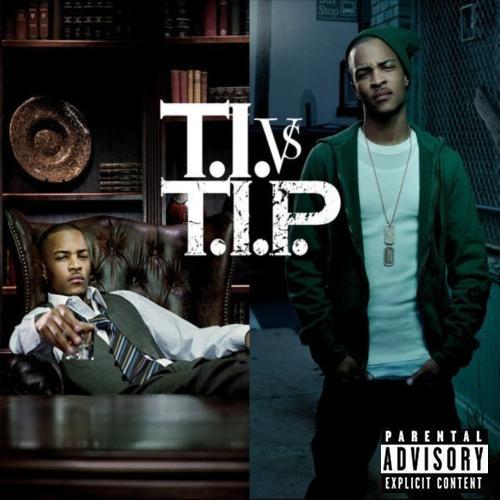
Usually, concept albums are rarely a good idea and a rap concept album is pretty much doomed from its inception. That is unless you’re T.I. then you might be able to pull it off.
On his 5th studio album, T.I. vs T.I.P, T.I. plays up his seemly split personality. The album is split into three parts. The first belongs to the ex-drug dealer, gangsta persona T.I.P.
The second part is dedicated to the more refined, more business oriented and slightly more level headed T.I. and things culminate with the ultimate battle between the two during the finale.
The album opens with a rather entertaining intro that finds T.I.P overtaking T.I., expressing disillusionment with the rap game and telling off virtually everyone important at his label.
It then proceeds into the summer’s slow burning hit “Big Things Poppin’ (Do It) produced by noted hip hop producer Mannie Fresh. The rest of the T.I.P portion proceeds with pretty much the same I’m-a-dope-boy-and-if-you-even-look-at-me-the-wrong-way-I’ll-kill-you subject matter.
While this is nothing different from most other rap albums, T.I. finds a way to still make it refreshing. It also helps that he has hip hop royalty such Jay-z and Busta Rhymes making guest appearances on songs like “Watch What You Say To Me” and “Hurt” respectively.
This section of the album does have its shining moments like “Da Dopeman” where T.I. explains that contrary to what your favorite rapper says, selling drugs is not all fast money and fast women. There are real consequences.
Act two opens with yet another intro; these are arguably the best part of the album. This time T.I. is in charge. The urgent sounding Just Blaze produced “Help is Coming” finds him making the bold assertion that he can save hip-hop. Which is probably true because T.I. was one of the few rap acts to go platinum last year.
The second set also finds an odd pairing with ex-Fugee Wyclef Jean on the relaxed “My Swag”. As weird as this might sound it actually works. One collabo that doesn’t work, however, is “Show It To Me” with Nelly. The live instrument backing is just a little too out of place.
One of the ways, this part of the album differs from the first is the choice in music. While the first part is filled with hard banging beats that are reminiscent of earlier T.I. albums such as Trap Muzik and Urban Legend. The second set of songs finds him rapping over more progressive and diverse beats.
The subject matter is also completely different. Gone are the street tales and threats. This set explores more of T.I.’s current lifestyle. He does this by name dropping expensive brands from cars to clothes and talking about life in the lap of luxury.
While this part of the album is not as cohesive as the first part, despite it’s misses it’s still entertaining. He also manages to pull Eminem out of self imposed retirement for a verse on the track “Touchdown”.
Act three is really where things get interesting. In “Tell Them I Said That” T.I. calls out rappers that feed their fans false stories of street life. On “Respect This Hustle” the confrontation between the two sides unfolds.
Complete with both sides addressing each other at the beginning and end of the song. Both T.I. and T.I.P set out to prove to each other they are good at what they do. While it’s a good idea in theory, in practice it’s pretty anticlimactic.
T.I. vs T.I.P. is filled with some refreshing and creative moments, however, it failed to live up to all the hype that surrounded its release. Although it falls short in some areas, it’s still fun to hear these two go at it.
Wednesday, May 23, 2007
Am I the only one who's sick of The Game?
Generally, gimmick-rappers get played out in a year or less.
They have one or so hits, then people realize there's other shit to listen to. Unfortunately, current hip hop radio is populated by a seemingly endless cycle of gimmick rapper after gimmick rapper, signed to small contracts by cunning record executives hoping to make a few easy million. Even so, we never quite have to be annoyed by one particular act for quite so long--at least, not until now.
Now we have The Game, the decent-at-best Compton rap act torn between being a gangsta and a nice guy who has somehow managed to keep himself in the spotlight since we first were introduced to him in 2003, despite being a virtual one-trick-pony. He has uncannily managed to make a substantial career out of ceaseless name-dropping and incessant feuding--his perpetually intermittent beef with former label-mate 50 Cent in particular.
A fact that we have to face in the hip hop community is that people are aways fascinated by a good-old-fashioned beef, no matter how frivolous it is or how completely ludicrous it's premise. Just think of some of the ridiculous shit rappers have squabbled over: Canibus and LL Cool J beefed because of a bizarre affinity LL had for a tattoo on his arm. The Nas/Jay-Z rivalry escalated to the rappers calling each other "gay" like third graders. Jermaine Dupri and Dr. Dre beefed because Dr. Dre wasn't taught the 'sticks and stones' rhyme as a child (the complete absurdity of two producers in a rapper beef notwithstanding). If there were an Emmy for dumb ass beefs though, the Game would be the easy victor. By now it's hard to tell why The Game and 50 Cent have been beefing for so long, all we know is that they just are, in a manner reminiscent of the Capulets and Montagues. For a while, we wanted to blame 50 cent, who seemingly started beef with every rapper he could think of for inane reasons, and I can deal with The Game responding when he's called out. But how many tracks do you gotta make, man?
The three year old beef continues to this day as a new diss track called "My Bitch" has leaked. To make things even more annoying, not only does Game diss his boyfriend 50, he also appears to want to revive an old beef with Suge Knight, and he, for reasons unknown, is also taking shots at Jay-Z. This guy doesn't know how to quit.
Click here to listen to "My Bitch".
Did I mention that Game also disses a host of video vixens and models including Melyssa Ford and Vida Guerra on a single called "Wouldn't Get Far" from his sophomore album Doctor's Advocate?
Yes, the dude is dissing fucking Vida Guerra now.
Friday, May 11, 2007
The Top Fifteen Southern Rap Acts of All time
With the recent "Southern Explosion" in rap music, I thought it fitting to chronicle the best the south has offered over the years, and since I live in the South, I've heard it all.
This is what I personally consider to be the top fifteen (and really ONLY notable fifteen) southern rap acts of all time. The most important criterion that I considered in this list is influence and affect on hip hop (in a notable or positive way) as a whole. I did also consider actual skill and entertainment value, but it was a secondary criterion. I only included official acts, not individual members of groups (unless they established a notable solo career). Also I did not include Virginia acts, because I think the VA scene is more in tune to east coast music than Southern music. With that said.
15. Goodie Mob: Goodie Mob not only personified "dirty south" music, they coined the phrase. Their mixture of grimey songs about street life with political and spiritual messaging was just the ticket to appealing to a mass audience in the nineties. They had street cred and they were politically aware. They weren't the same old ignorant gangstas we were used to. These guys actually saw the bullshit they were dealing with everyday. They weren't the most technically skilled bunch, but their lyrics were so honest and that's what made them good.
14. Arrested Development: Arrested Development set the stage for acts like Goodie Mob. They proved that a rapper could be a nice guy and still be popular. Super popular. Insanely popular. These guys had multiple number one hits and they even one a Grammy. Unfortunately, their success ended almost as quickly as it came, but there is no doubt that they left a lasting mark on mainstream hip hop, leaving that little door open for socially conscious acts to come.
13. 2 Live Crew: These guys basically invented mainstream Southern rap music. Before then, acts from the south would move to one of the coasts to start their career and 2 Live Crew, admittedly did begin on the West Coast, but when the group was signed by Miami entrepeneur Luke, they became a strictly Southern act. They mixed elements of pure dance music and hardcore rap music, added extremely sexual lyrics and rode the waves of controversy until their debut album went double platinum. They actually were banned in Florida for a time, but that only made people want to get their hands on a copy of their music even more.
12. CunninLynguists: Southern rap had been around for a while when CunninLynguists debuted, and with few exceptions was mostly critically panned. The lack of technical skill and artistic vision didn't appeal to those that were fans of the much more lyrically sound east coast artists. Then along came Kno and Deacon. These guys actually could rap. They actually rapped about something, and not the same thing on every album! Who'dathunk? CunninLynguists garnered attention with their clever name and remained notable in the underground to this day.
11. UGK: UGK are the underdogs of rap. They've been around for EVER. They made music because they liked to. They weren't concerned that much with going platinum, they just wanted to make some pimptastic ass shit for the homies to bump. And they did that for twenty years, and still continue to do it. Thanks in part to their appearance on Jay-Z's hit "Big Pimpin'", to Bun-B appearing on EVERYONE'S album during Pimp C's incarceration, and also to Bun-B's successful solo debut, UGK has finally reached the mainstream spotlight. They've got more of a poppy feel to their tracks now, but still the same gangsta lyrics.
10. Lil' Wayne: Weezy's been the game a long time, even though he's still a young guy. He was one of the key reasons for the original Cash Money Record's success. When his debut Tha Block is Hot was announced, there was little doubt in any Cash Money fan's mind that it was going to be dope. After Juvenile's triumph in 400 Degreez, fans were torn between who was the best in Cash Money, Juvvy or Weezy. After Juvvy's fall from the spotlight, Wayne has certainly took that spot. After the disappointing 500 Degreez, Lil' Wayne took some time off to listen to Jay-Z's The Black Album. Sometime during this period he began to realize the potential that he'd had for so many years. He started using more complex rhyme schemes, he started playing with his words more. He took a page from his mentor Jay-Z's book and built from there. This was essential in gaining respect in the South from elitist east coast fans. He claims that Tha Carter marks his perfection of his craft, but I don't think so. I think Wayne's got much more potential, and in a future incarnation of this list he may be much higher.
9. Three 6 Mafia: This Memphis group that at one point sported around six members and ended up with only two spend most of their career under the mainstream radar. Not to say that they weren't doing anything. They virtually invented what is now known as "crunk" music. DJ paul and Juicy J also set a new standard for production in southern rap, and rap in general. Due to their alleged association with the occult and their Satanic monicker, radio stations (especially in the South) were hesitant to support them. It wasn't until their album Choices II and the mega hit "Stay Fly" that they achieved national success. This led to their work on the feature film Hustle and Flow, which result in them being one of the only two rap acts to win an Oscar. They won a fucking ACADEMY AWARD.
8. Lil' Jon & The East Side Boyz: Between 2002 and 2004, not only was Lil' Jon the King of Crunk, he was the King of RAP. He ran rap music. Him and his East Side Boyz released the incredibly popular Kings of Crunk and it swept the nation. It wasn't the grimey rap music from the streets that we were used to, it was fun, it was flashy, it was loud and it was incredibly simple. Anyone can scream "Yeeeaaaah". It's fun. It's a hit at clubs. It offended those who felt rap should have more substance, but it undeniably was something that people wanted to hear and bob their heads violently too. Lil' Jon's albums are an INTENSE blend of heavy bass, loud synthesized sounds, and a lot of screaming; his tracks sort of are rap's answer to death metal.
7. Master P: Master P was the first southern rap visionary. The first southern rap entrepreneur. Master P is the best example in rap's history of nothing to something through sheer ambition and determination. He didn't get discovered and offered a deal. He didn't release a surprise hit single. He started a record label literally from the ground up. He sold his first album out of the trunk of his car. New Orleans had been looking for their place in rap music, so they were waiting for Master P. His honest, yet hardcore lyrics, made his very first CD, sold out of the trunk of his car, go nearly gold...without any sort of promotion. This gained the attention of the distributor Priority records. That's right, they came to him. He didn't go out sending demos to everyone. They came to him. They gave him creative control. They gave him ownership. The sound was so unique, the lyrics were novel. Master P's grimey voice and bouncy flow was perfectly catchy. Master P's original "no limit" vision was proving to be true. Basically everything Master P put his hands on for the next four years or so became a mega success. Even that crappy movie he wrote, produced, directed and starred in, I'm Bout It. He didn't become the richest rapper of all time, though, until he decided to make No Limit a conglomerate. Yes a conglomerate. There were No Limit movies, toys, clothing, books, stores, sports management firms; they even had a phone sex service. This in tern made Master P the richest rapper of all time, and despite he fast fall from the spot light after the turn of the millenium, he still remains one of the wealthiest entertainers ever. If anyone had anything to do with Southern rap being the mainstream powerhouse it is, it is Master P.
6. Juvenile: At the beginning his career, Juvvy was was mainly known as 'the best rapper on Cash Money', and really nothing more. He has one of the most distinct styles in music history and one of the most recognizable voices. In 1998, he released the Southern classic 400 Degreez which effectively made him a star, and it put Cash Money on the mainstream map, paving the way for the success of B.G, Lil Wayne, and The Big Tymers. 400 Degreez wasn't a lyrical masterpiece or a feat of creative mastery. It was just an album chock full of solid tracks. The leading single "Ha" was a refreshingly unique social commentary and this was followed by arguably the first southern rap/pop crossover hit, "Back that Azz Up". The song may've been played too many times for anyone to really want to hear it anymore, but it is a brilliantly executed track. Everything from Juvvy's unique and mind numbingly catchy singsong flow to Manny Fresh's marvelous beat made this track extend beyond the constraints that most rap music is held behind. After "Back that Azz up", Juvenile has managed to keep himself in the spotlight, even without Cash Money backing him. He's released several hit singles, like "Slow Motion", "Nolia Clap", and "Rodeo". People just can't get enough of the always unique Juvvy.
5. Geto Boys: Geto Boys was the South's answer to NWA. They were more talented than the Californians though. They had more to say, and they were more apt to say it. They explored more taboo subjects such as rape and necrophilia, but they are mostly notable for their extreme social commentary in a time where being a gangsta was about shooting guns, not exploring why one might shoot a gun. The reason they are on this list is because, they virtually put Southern rap on the map. 2 Live Crew invented mainstream Southern rap music, but the Geto Boys opened the door for every other mainstream Southern rap act to come. 2 Live Crew built the house, the Geto Boys opened the door.
4. Eightball and MJG: Eightball and MJG are one of the most consistently innovative rap groups of all time. They have been around through every trend of rap, yet they still managed to create unique blends of Southern funk and crunk, as well as every other type of music, with each and every album. They are truly legends in Southern rap. They aren't very spectacular rappers, but they are artists, for sure. They continue to experiment with new sounds and new blends of sounds, setting many of the trends Southern Rap has seen. They're on a whole different level than most Southern rap acts, and they know it. They don't rap about anything, they're mostly concerned with the sounds they create. I couldn't reasonably name everything they've tried and succeeded doing.
3. Ludacris: Luda was one of those guys that was dope right out the box. Most rap artists show promise in the beginning, but eventually evolve into the artist they were meant to be. Ludacris, however, was incredible to begin with. His very first album showcased a polished flow, great production, and the witty, East Coast friendly lyrics that would define his career. Wielding one of the best voices in the history of rap and one of the smoothest flows, Luda is one of those rappers that people will probably always like. With five critically acclaimed albums, and probably more to come, Luda stood at the forefront of rap music at the dawn of the new millennium alongside his often collaborator, Lil' Jon. His music wasn't even really "southern music", it's just Luda music. He broke through that barrier by refusing to box himself a certain style. Some of his songs are definitely "dirty south" in style, but others are inspired directly from East coast styles, and some are a unique amalgam of the two. Easily one of the more creative Southern acts, he's accomplished creative feats such as Chicken and Beer, which is basically an album where nearly every song is about sex or women, yet he still managed to find a way to make every song distinct.
Monday, March 19, 2007
8 Ball and MJG haven't fallen off yet

Buy this album from Amazon.com---93 used & new available from $6.00
With so many re-hash southern albums coming out nowadays, it hard not to form a prejudice against them. So when I heard about Ridin High, I was expecting it to be another "do what's popular at the time" type albums. But it isn't. In fact, its the same 8 Ball and MJG experimental southern funk and crunk that we all fell in love with in the 'Mr. Big' days. Southern artists get offended when East Coast artist blame them for "killing hip hop"; their defense is usually that they make the "party music" that people want to just jump around and get crunk to. It's actually a compelling argument when you listen to most of the high-energy southern tracks that have been coming out recently; but when you compare those records to 8 Ball and MJG's, you really start to notice just how amateur these other artists are by comparison. Ridin High has a sophistication that is just simply missing from a Young Joc album or even a Lil Wayne album. 8 Ball and MJG have certainly found their element in this mixture of mellow southern funk and energetic crunk music, and while I'm not sure that the duo can be called the 'kings of the south', they definitely should put their application in for 'kings of party rap.
Ridin High is not perfect, by any means; no 8 Ball and MJG album will be perfect in my eyes until the group explores different subjects beyond violence, pussy, and drugs. Neither 8 Ball or MJG is a very good rapper either. The main strength of this album is in the experimentation in the composition of the songs and the myriad of sounds it has. The actual subject matter of the songs is somewhat expendable, although I think if they weren't the songs would be a lot better.
When I first heard about the first track and first single, "Relax and Take Notes" featuring Project Pat and The Notorious B.I.G., I thought to myself 'oh lord, its another song exploiting Biggie, they're probably going to sample his verse from "Dead Wrong" in the hook and it's going to suck.' Well, they did sample "Dead Wrong", but the song doesn't actually suck. The sample was mixed just about as tight as it possibly could have been, and the production is great. 8 Ball and MJG, unlike nearly every other contemporary southern artist, aren't afraid to take a energetic beat and combine it more mellow flows. It provides for a unique sound that set them apart. Project Pat isn't as interesting as he usually is, and the song isn't as effective as "You Don't Want Drama", but overall it is a sucess.
Some songs miss, like the DJ Paul and Juicy J production "Cruzin'" featuring 112 and Three 6 Mafia. I wish 112 would go away. The beat for this track is a complete rehash and 112's chorus bites the melody from Usher's "Nice and Slow" for some reason. Some songs are missing the creativity in either concept or production that make this album great, like "Alcohol Pussy Weed", which combines a standard subject with a fairly standard beat.
There is an interesting degree of experimentation with different sounds on this album with strange productions like "30 Rocks" which sounds like a combination of Houston rap and East Coast dance music; "Memphis", which uses an eerie off-key vocal sample on a "inspirational" sounding beat for a M-Town reppin' track; and "Stand Up", which may quite possibly be the first ever mainstream rap WALTZ. It's experimentation like this that puts 8 Ball and MJG over all their peers who also rap about violence, pussy, and drugs.
Ridin High is a great album in terms of exploring new ways to make party music and music to bump in your car. In case you forgot why 8 Ball and MJG are southern hip hop legends, this album might remind you. I've seen some bad review for this album, and I think that it's because we've gotten to a point where we don't tolerate experimentation anymore in hip hop (unless, of course, it's Outkast). We want to be spoon-fed formulaic productions over and over on and album, but the thing is Eightball and MJG started this whole southern funk thing. They don't do the same music as Three 6 or T.I., so why expect them to make albums like those? Three 6 and T.I. wouldn't be where they are if it weren't for 8 Ball and MJG. The fact is, a long time ago, two dudes from Tennessee made a funky experimental album that was the south's answer to West Coast G-funk artists like Dr. Dre and Snoop Dogg and grimey east coast acts like the newly formed Wu-Tang Clan and Nas. While Comin out Hard wasn't nearly as successful as the albums of Dr. Dre or The Wu-Tang Clan, it showed that legitimate rap music existed in the south. And fourteen years later, with Ridin High, 8 Ball and MJG haven't missed a beat.
The Report Card
Production: B
The beats are nothing like the beats of any other southern album that's out now. The experimentation with the production is also appreciated.
Flow/Lyrics: C
8 ball and MJG are neither very good at rapping or writing. Every once in while they may spit a tight or funny line, but all in all they use the same sing song flow on every track. MJG has a better flow than 8 Ball, but 8 Ball has a more appealing delivery and persona, but neither can compare to the best flowers in the game.
Originality:B+
If they could find something to rap about besides killing people and pimpin', they might have gotten the A, but other than that, the sound of this album is completely unique. There's a fucking waltz on it for christ's sake.
Overall: B
If you buy albums based on the subject matter, I wouldn't suggest you buy this album (unless, of course, you like 19 tracks of guns, weed, and bitches [which I guess isn't far-fetched]. However, if you're looking for a unique southern record, Ridin High is probably your best bet.
Friday, March 9, 2007
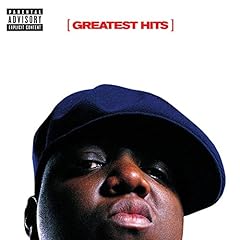
Greatest Hits provides the reason why he was one of the best to ever do it
Buy this album from Amazon.com---88 used & new available from $8.71
Late Night Special offers unique, yet unpolished sound

Buy this album from Amazon.com---95 used & new available from $4.56
A hit radio remix? Close. The answer we were looking for is the Miami pop quartet Pretty Ricky; but you bring up an interesting point with your answer.
Pretty Ricky has created an unusual sound by combining cheesy 90's-sounding R&B with energetic, sometimes to the point of "crunk", rap verses. The effect is that "remix" sound that many acts achieve by commissioning the hottest rapper at the time to spit a verse on their R&B hit. The question inevitably arises though. Do I really want to hear a whole album of this?
Well, not when Pretty Ricky does it, at least.
Pretty Ricky's sound is unusual, and has been very rarely duplicated wholly by any act (although that may be for lack of trying); and honestly that, along with the satisfactory production, is about the only semi-positive thing I have to say about them and their latest album Late Night Special. No one in the group is particularly talented. Their lead singer, Marcus "Pleasure" Cooper, seems to bank on his decent-at-best high notes in every track. Baby Blue, Pretty Ricky's best rapper (and I use "best" only because the other 2 rappers are that shitty), shows sparks of lyrical cleverness (buyin drinks for these chicks and now they owe me/ more gin if you wine, i'm the same ol G), but mostly he relies on cliche wordplay like "do you after school like some homework" in a fruitless attempt at making up for his severely amateur flow.
If the lack of talent exhibited on Late Night Special isn't enough to deter you, maybe the lack of variety will. Every song on the album is pretty much the same song. They'd have you believe that, while every song is indeed about sex, there are still differences in the concepts of the songs. For example, "So Confused" appears to be about a guy who wants a girl, but she has a "man at home", but as soon as Baby Blue starts rapping, you see that its all been a ruse.
I need a lady in the streets, a freak between the sheets,
on the down low freak, now baby come to me
That doesn't really sound like a lametation about lost love to me.
Essentially, Late Night Special is Pretty Ricky's attempt saying "I wanna fuck you" in as many ways possible. Sometimes the ideas are fairly clever ("Personal Trainer"), and sometimes they are pretty awkward ("Peer Pressure"--I don't think "can I put a little peer pressure on you" should be used when trying to get a girl to have sex with you. It comes out all wrong.)
The production is solid. The beats are quite often the best part of the songs on the album, which isn't saying much. Most of the beats are typical-sounding R&B beats, but they aren't terrible, so Pretty Ricky's production team has some degree of talent. A couple of the beats are actually good, like "Make it Like it Was" and "Personal Trainer".
With 3 rappers and 1 singer, you'd think that Pretty Ricky would be more of a rap group than an R&B group, but all of their songs are basically R&B or pop songs with rap verses on them. The only exception to this is "Personal Trainer", which is a rap song at heart, and even though it is an obvious rip off of Kanye West's "Kanye's Workout Plan" it's the best song on the album.
Late Night Special is a pretty unimpressive effort, and really the main enjoyment I got out of it was trying to find as many corny sexual lines as I could. The album is filled with hilarious lines that I don't think are meant to be funny, but are anyway. Here are some to start you off.
"Let's make sex a holiday."
"Take them granny panties off, put a thong on"
"Yeah I met you on Mypsace"
"I'll leave it all up to you, girl. Am I hittin' it tonight?"
"I even got your name tattooed backwards on my chest, so only my heart can read it"
Have fun!
The Report Card
Production: C+
The songs are put together well for the most part. The beats are pretty average, with a few sparks. Nothing remarkable by any means.
Flow/Lyrics: D-
No one in the group has much talent. Baby Blue's occasional spark saved them from recieving an F. The song aren't well written. The lyrics are cheesy and ridiculous. The concepts are overdone and useless.
Originality: D-
Their sound is unusual, but other than that, Late Night Special offers nothing new to music whatsoever.
Overall: D-
It's just not that good an album. It's a bunch of people with little skill making a bunch of wack songs about the same thing.
Thursday, January 25, 2007
Gangsterism is ruining hip-hop
Despite the sudden unbelievable demand for hip-hop in pop culture, there still remains a host of people who don't care much for rap music or hip hop culture in general. Their criticisms often include the assertion that hip-hop music essentially consists of thugs bragging rhythmically about drug dealing and violence over sampled loops. While this notion is generally poorly founded; based mostly on MTV's limited repertoire of hip-hop videos, these dissenters do bring up a point worthy of discussion. While not all, and probably not even the majority, of hip-hop music is violent and drug-laden, the part that is is becoming a rapidly spreading virus that is both detrimental to hip-hop and to this generation.
Hip-hop started in the streets. This is something that most everyone knows, and what most people would cite in opposition to the idea that "gangsterism" is ruining hip-hop. What those people don't realize though, is that early gangsta rap musicians weren't gangsta because it was cool to be gangsta, and they didn't necessarily want you to think that it was cool either. Gangsta rap pioneers like Schoolly D and Ice T were being frighteningly personal and intentionally antisocial because it was a way to express themselves and shock people, all while exposing the harsh realities of their lives. It was new. It was, for all intents and purposes, experimental. It was, by all definitions of the word, art. The key difference between Schoolly D and 50 Cent is that Schoolly D would have repped his gang and rapped about gunnin' down his enemies whether it was marketable or not; and to be quite honest, until NWA arrived (and Dr. Dre and Snoop Dogg in particular), that brand of hardcore gangsta rap wasn't very commercially marketable. The difference between Schoolly D and 50 Cent is that Schoolly D says “I'm a G, and I don't give a fuck what you think about it”, while 50 Cent says “I'm a G, and it's important that you think that's cool”. Schoolly D wants you to think he's different from you. He wants you to fear him. He wants you to think he's a menace.
50 Cent, on the other hand, wants you to buy his G-Unit brand socks. He wants to be accessible to you and your family. He wants you to think he's cool. He wants you to accept him; and through some kind of strange industry magic, we have done just that. We have casually let admitted murderers into our way of life. We have let supposed drug dealers become role models for our society. Someone might say, “Well, if his music is entertaining, who cares what he talks about or what life he lives?” The problem, however, is not in the live he lives, but the fact that we accept the life he lives. Some people, for example, might know that Charles Manson was a musician and songwriter, and not a half bad one to boot. His songs have been covered many times since his incarceration. However, I would wager that most, if not all, of the people who like and/or cover his music do not accept the things he did as okay, much less cool!
Why is that? Frankly, it's because murder (and subsequently the conspiracy to commit it) is not okay, and it's not cool! Distributing harmful drugs (especially crack, which, although people are becoming more educated about it, has continued to contribute to the debilitation of several communities and families for decades) to your neighborhood is not okay, and it's not cool! Somehow, though, the hip-hop industry has convinced this generation that the life of a gangsta is not only both okay and cool, but also preferable. This is something that I'm certain both Schoolly D and Ice T would have nothing of. Mainstream hip-hop has become largely a breeding grounds for criminality, when it was supposed to be one for art and expression.
I want everyone to just sit down for a minute and be honest. These people are our kids' role models, whether we like it or not. Celebrities dictate which styles are fashionable. They introduce new words into our vernacular. They tell us what products to buy. Parents have a job to monitor what their kids subject themselves to, and kids have a responsibility to respect and trust their parents' judgment. But rappers, and celebrities in general, have a responsibility to refrain from misusing the tremendous influence they have on our society. It's okay for Tom Cruise to star in a movie with swearing and violence, because children are not permitted to enter the theater without an adult present. It's not okay for today's rappers to glorify an obviously detrimental and amoral lifestyle in an industry whose target audience is impressionable pre-teens and adolescents.
